Meniscus Tear Surgery in Faridabad: Symptoms, Diagnosis & Arthroscopic Repair

ACL Treatment in Faridabad: The Complete Guide to Diagnosis, Surgery & Return to Sport
July 14, 2026
Best Total Shoulder Replacement in Faridabad: Which Type Do You Need & What to Expect
July 15, 2026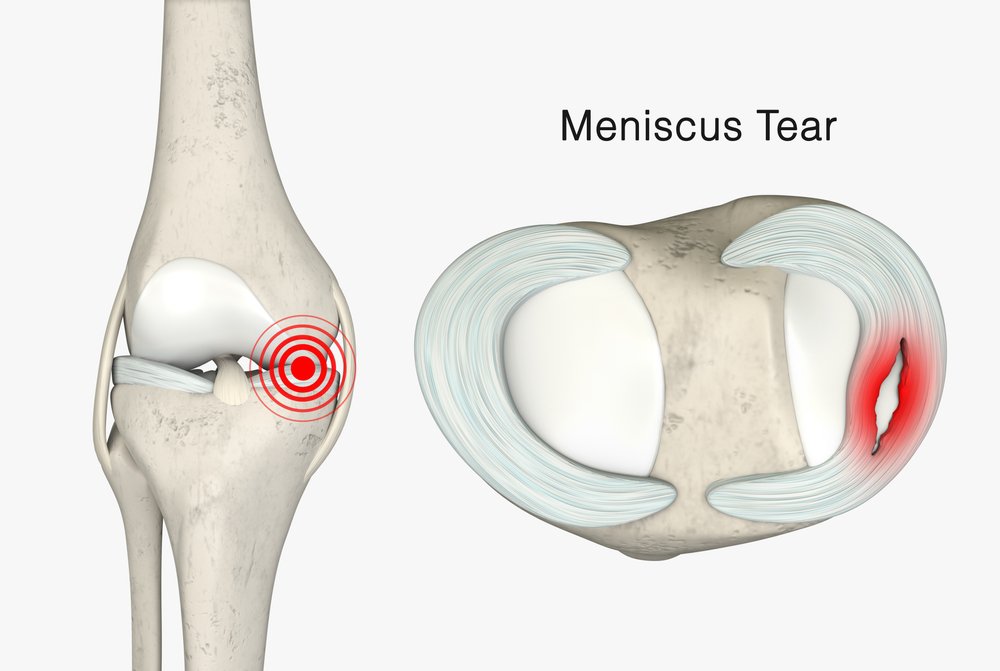
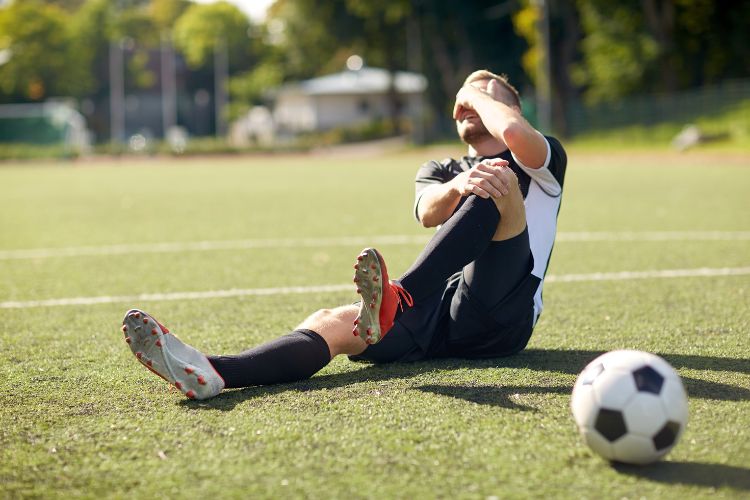
That clicking sound from your knee when you climb stairs. The sharp locking sensation halfway through a squat. The swelling that arrives after a game of cricket or a long walk and takes days to settle. These are the classic signals of a meniscus tear — one of the most common knee injuries in both athletes and older adults, and one of the most frequently mismanaged when treated without specialist evaluation.
Meniscus tear surgery in Faridabad at Dr. Sunil Choudhary’s Bone & Joints Clinic is approached with a clear, evidence-based principle: not every meniscus tear requires surgery immediately, but every meniscus tear deserves an accurate diagnosis first. As a UK-trained orthopedic specialist in Faridabad with over 20 years and 2,000+ surgeries, Dr. Choudhary brings the clinical precision that distinguishes an optimal meniscal outcome from years of persistent knee problems.
What Is the Meniscus and Why Does It Matter?
The knee contains two C-shaped fibrocartilaginous discs — the medial meniscus (inner side) and the lateral meniscus (outer side). Each sits between the femur (thighbone) and the tibia (shinbone), performing three critical functions:
- Load distribution — spreading the compressive forces across the knee joint surface rather than concentrating them on one spot
- Shock absorption — cushioning the knee during impact activities
- Joint stability — contributing to rotational stability alongside the cruciate ligaments
The meniscus is not simply a spacer. It is a functional, living structure that — when intact — protects the articular cartilage from premature wear. Removing too much of it has long-term consequences for knee health that are now well-documented in orthopaedic literature. This is why modern meniscal surgery philosophy prioritises preservation and repair wherever possible.
How Meniscus Tears Happen — Two Completely Different Mechanisms
Acute Traumatic Tears (Younger, Active Patients)
These occur from a sudden rotational force on a partially flexed, weight-bearing knee — the same mechanism that tears the ACL. Common scenarios:
- Pivoting to change direction during cricket, football, or kabaddi
- Landing awkwardly from a jump
- Twisting the knee while the foot is planted
- A direct blow or tackle from another player
Traumatic tears often occur in the vascular (outer) portion of the meniscus — where blood supply exists and surgical repair is feasible. They frequently occur alongside ACL tears. For related information on combined knee ligament injuries: ACL Treatment in Faridabad — Symptoms, Surgery & Recovery
Degenerative Tears (Older Adults, 45+)
These occur from cumulative wear and tear on a meniscus that has become progressively stiffer and less resilient with age. Often triggered by a minimal mechanism — stepping off a kerb, rising from a low chair, or even just kneeling. The meniscus tissue in degenerative tears is usually fragmented and of poor quality, making repair generally not feasible — and conservative management more often the first-line approach.
Recognising a Meniscus Tear: Symptoms That Point to the Diagnosis
Not all knee pain is meniscal, and not all meniscal tears produce the same symptoms. The pattern of symptoms is what helps a trained orthopaedic surgeon identify the likely cause before imaging confirms it:
Classic meniscus tear symptoms:
- Joint line tenderness — pain localised precisely to the medial or lateral joint line (the crease where the femur meets the tibia); highly specific for meniscal pathology
- Mechanical symptoms — locking (the knee suddenly unable to fully straighten), catching, or clicking during movement; these mechanical features strongly suggest a displaced or bucket-handle tear
- Swelling — typically develops gradually over 24–48 hours after an acute injury; less florid than the immediate haemarthrosis of an ACL tear
- Pain with specific activities — squatting, twisting, pivoting, walking downstairs; activities that load and rotate the meniscus
- Giving way — a sense of the knee collapsing, particularly on rotational movements
What does NOT confirm a meniscus tear: A single negative clinical test or an X-ray that shows nothing. X-rays image bone, not soft tissue — they cannot show a meniscus tear. MRI is the investigation of choice.
Diagnosing a Meniscus Tear at Dr. Sunil Choudhary’s Clinic in Faridabad
Clinical Examination
Dr. Choudhary uses validated physical examination tests that — in experienced hands — are highly sensitive for meniscal pathology:
- McMurray’s test — the knee is rotated while being extended; a click or pain at the joint line indicates meniscal involvement
- Apley’s grind test — axial compression with rotation assesses meniscal integrity
- Thessaly’s test — single-leg stance with knee flexion; the most functionally specific test
- Joint line palpation — direct tenderness localised to the medial or lateral joint line
MRI of the Knee
The gold standard imaging investigation for meniscal tears — identifying the tear pattern, location, and extent, as well as any associated injuries (ACL, cartilage, bone bruise). MRI also classifies the tear by its morphology:
| Tear Type | Description | Repair Feasibility |
| Longitudinal/vertical | Along the length of the meniscus | Often repairable |
| Bucket-handle | A large longitudinal tear that displaces | Often repairable |
| Radial | Cuts across the width; disrupts load distribution | Limited repair options |
| Horizontal | Splits the meniscus into top and bottom halves | Usually not repairable |
| Complex/Degenerative | Multiple tear patterns in degenerate tissue | Partial meniscectomy |
For associated cartilage damage that frequently accompanies meniscal tears: Cartilage Reconstruction in Faridabad
Meniscus Tear Treatment Options in Faridabad: When to Operate and When to Wait
Conservative Management First (For Appropriate Cases)
Not every meniscus tear needs immediate surgery. The following meniscal tears are often managed non-operatively with good results:
- Stable, peripheral, small tears — particularly in the vascular zone; may heal spontaneously with protected activity and physiotherapy
- Degenerative tears in older adults without mechanical symptoms — MRI evidence of a degenerative tear alone, in the absence of locking, catching, or persistent mechanical symptoms, is often best managed with physiotherapy, NSAIDs, and activity modification
- Acute tears with minimal symptoms — if swelling settles, full range of motion returns, and the patient has no mechanical features, a supervised conservative programme is entirely reasonable
Conservative management includes:
- RICE protocol (Rest, Ice, Compression, Elevation) in the acute phase
- NSAIDs and analgesics for pain and inflammation
- Physiotherapy — quadriceps and hamstring strengthening, proprioception exercises, return-to-activity guidance
- Corticosteroid or hyaluronic acid injections for selected patients
Arthroscopic Meniscus Surgery — When Operation Is the Answer
Surgery is recommended when:
- Mechanical symptoms are present — locking, catching, or significant functional limitation
- Conservative management has failed after an appropriate trial (typically 6–12 weeks)
- A bucket-handle tear has displaced, preventing full knee extension
- The tear pattern is repairable — particularly in younger patients where repair rather than resection is the preferred approach
Two surgical approaches are available:
Arthroscopic Partial Meniscectomy
The torn, unstable meniscal tissue is trimmed back to a stable rim — removing only what is necessary while preserving as much healthy meniscus as possible. This is not the same as total meniscus removal, which was performed historically and is now strongly avoided due to the long-term risk of accelerated knee arthritis.
- Performed under spinal or general anaesthesia
- 2–3 small incisions (portals) less than 1 cm each
- Operating time: 20–45 minutes
- Discharge: day surgery or next morning
- Return to light activity: 2–4 weeks; sport: 6–12 weeks
Arthroscopic Meniscal Repair
For tears in the outer (vascular) zone — particularly longitudinal and bucket-handle tears — the torn tissue is sutured back to its bed using arthroscopic suture passing devices. The biological goal is to allow the tear to heal with its own blood supply.
- Same arthroscopic technique as partial meniscectomy
- Protected weight-bearing post-operatively for 4–6 weeks
- Longer rehabilitation than meniscectomy — but preserves the meniscus long-term
- Return to sport: 4–6 months
For detailed information on our meniscus repair service: Meniscus Repair in Faridabad — Dr. Sunil Choudhary
For associated PCL injuries that sometimes accompany meniscal damage: PCL Injury Treatment in Faridabad
Recovery After Meniscus Tear Surgery in Faridabad
| Phase | Timeline | Key Goals |
| Immediate | Day 1–3 | Ice, elevation, pain control, straight-leg raises |
| Early mobility | Week 1–3 | Full weight-bearing (partial meniscectomy); crutches (repair) |
| Strengthening | Week 3–8 | Quads, hamstrings, glutes; stationary cycling |
| Functional | Week 8–12 | Return to walking, light jogging (meniscectomy) |
| Return to sport | 3–6 months (repair) / 6–12 weeks (meniscectomy) | Strength symmetry, proprioception, agility |
The meniscus is now understood as a vital protector of knee cartilage — every millimetre of meniscal tissue preserved is a millimetre of protection against future knee arthritis. In patients whose meniscal loss eventually leads to significant knee arthritis, total knee replacement in Faridabad may be required in later decades — making preservation of the meniscus now a genuinely important long-term investment.
Why Choose Dr. Sunil Choudhary for Meniscus Tear Surgery in Faridabad?
As a UK-trained orthopaedic knee specialist, Dr. Sunil Choudhary brings:
- 20+ years and 2,000+ surgeries — high-volume arthroscopic experience
- Preservation-first philosophy — repair wherever possible; remove only what is necessary
- Concurrent injury management — ACL tears, cartilage damage, and PCL injuries addressed in the same operative session when present
- Structured rehabilitation — every patient receives a personalised post-operative physiotherapy plan
For the full range of sports injury care: Best Sports Injury Specialist in Faridabad
To understand when any orthopaedic issue needs specialist evaluation: When Is It Time to See an Orthopaedic Doctor in Faridabad?
Conclusion: Meniscus Tear Surgery in Faridabad — Preserve First, Operate When Necessary
The meniscus is irreplaceable. Every management decision — conservative or surgical — should be guided by preserving as much functional meniscal tissue as possible. Meniscus tear surgery in Faridabad at Dr. Sunil Choudhary’s Bone & Joints Clinic follows this principle rigorously — with precise arthroscopic technique, evidence-based patient selection, and a genuine commitment to long-term knee health over short-term convenience.
Your knee deserves a surgeon who treats it as if it needs to last another 40 years. At Dr. Sunil Choudhary’s clinic, it will be.
Book Your Knee Evaluation — Dr. Sunil Choudhary, Faridabad
Knee clicking, locking, or swelling that hasn’t settled? Get it properly assessed.
+91 971-776-7209 | +91 997-170-9209