Joint Replacement Surgeon in Faridabad: Knee, Hip & Shoulder — Your Complete Decision Guide

Arthroscopic Rotator Cuff Repair in Faridabad: When Your Shoulder Needs More Than Rest
August 4, 2026
Cartilage Surgery in Faridabad: Protect Your Knee Before It Reaches Replacement
August 10, 2026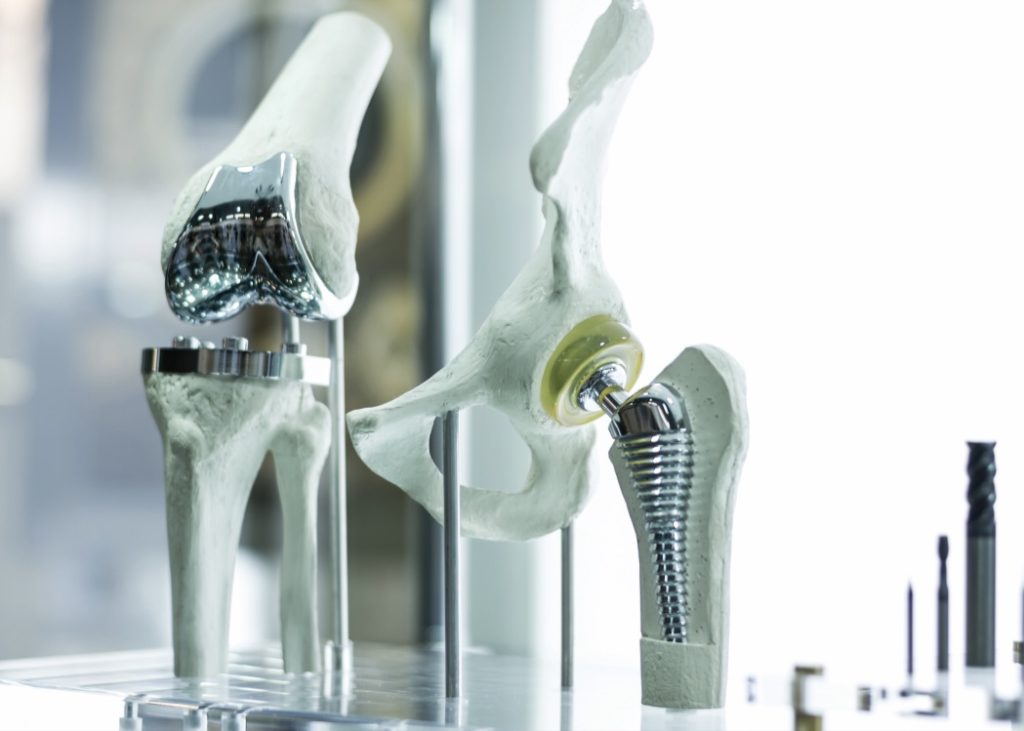
There comes a point in the progression of joint disease — arthritis, avascular necrosis, post-traumatic deterioration — when the pain is no longer manageable with medication, the walking distance has shrunk to a few hundred metres, stairs have become a daily negotiation, and sleep is disrupted by aching joints. At this point, the question shifts from “how do I manage this?” to “which joint replacement is right for me, and who should do it?”
As Faridabad’s leading UK-trained orthopedic doctor in Faridabad and joint replacement subspecialist, Dr. Sunil Choudhary at the Bone & Joints Clinic has performed over 2,000 joint replacement surgeries across the knee, hip, and shoulder. This guide explains each replacement type, who qualifies, what modern surgical techniques offer, and the questions every patient should ask before consenting to surgery.
What Is Joint Replacement Surgery?
Joint arthroplasty — the medical term for joint replacement — replaces damaged joint surfaces with prosthetic components, recreating a smooth, pain-free articulating surface. Contrary to common belief, joint replacement does not replace the entire bone. It resurfaces the ends of bones where they meet at the joint, leaving the bone itself intact.
What joint replacement reliably achieves:
- Elimination or dramatic reduction of joint pain
- Restoration of walking distance and functional mobility
- Correction of deformity (bow legs, knock knees)
- Improved sleep — night pain resolves rapidly in most patients
- Return to activities including walking, swimming, cycling, and light recreation
What joint replacement cannot guarantee:
- Return to high-impact sport (implants have wear limitations)
- Absolute normal sensation — a replaced joint feels different from a native one
- Permanent solution — modern implants last 15–20+ years in most patients, but revision may eventually be needed
Knee Joint Replacement in Faridabad
The knee is the most commonly replaced joint — and the one where Faridabad patients most frequently present to Dr. Sunil Choudhary’s clinic.
Total Knee Replacement (TKR)
All three compartments of the knee (medial, lateral, and patellofemoral) are replaced — the femoral condyles, tibial plateau, and patellar surface. A metal femoral component and polyethylene tibial insert recreate smooth articulation.
Who needs TKR:
- Tricompartmental osteoarthritis — the most common indication
- Rheumatoid and inflammatory arthritis of the knee
- Post-traumatic arthritis following severe knee fractures
- Avascular necrosis of the femoral condyle (bilateral disease)
- Failed previous partial replacement
Modern TKR at Dr. Sunil Choudhary’s clinic:
- Cruciate-retaining (CR) designs — preserving the PCL for more natural kinematics
- Posterior-stabilised (PS) designs — for cases where the PCL is deficient
- Gender-specific implants — addressing the anatomical differences in women’s knees
- High-flexion implants — for patients who require deep knee flexion for cultural activities
Expected longevity: 90% of modern TKR implants function well at 15 years; 80% at 20 years.
For the complete knee replacement guide: Total Knee Replacement at Dr. Sunil Choudhary’s Clinic
Unicondylar (Partial) Knee Replacement (UKR)
Only the diseased compartment — usually the medial — is replaced, preserving both cruciate ligaments and the healthy cartilage of the other compartments.
Why UKR when it’s appropriate:
- Smaller surgery — less blood loss, smaller incision
- Faster recovery — most patients walking freely within 1–2 weeks
- More natural knee feel — cruciate ligaments preserved
- Bone stock preserved for future revision if needed
When UKR is not appropriate:
- Multi-compartmental arthritis
- Absent ACL
- Severe deformity (greater than 15°)
- BMI above 35
For unicondylar replacement details: Unicondylar Partial Knee Replacement
Revision Total Knee Replacement
When a previous knee replacement has failed — from loosening, infection, implant wear, instability, or periprosthetic fracture — revision surgery replaces the failed components. The most technically demanding procedure in knee arthroplasty.
For revision knee information: Revision Total Knee Replacement in Faridabad
Detailed blog: Revision Total Knee Replacement — Complete Guide
Hip Joint Replacement in Faridabad
Total Hip Replacement (THR)
The femoral head (ball) and acetabulum (socket) are both replaced — with a stem in the femoral canal, a metal or ceramic femoral head, and a cup fixed in the acetabulum.
Who needs THR:
- End-stage hip osteoarthritis — the most common indication
- Avascular necrosis (AVN) of the femoral head — particularly common from steroid use in India
- Post-traumatic hip arthritis
- Rheumatoid and inflammatory arthritis
- Failed previous hip procedures (DHS, screws, hemiarthroplasty)
Bearing surface options at Dr. Sunil Choudhary’s clinic:
- Ceramic-on-highly cross-linked polyethylene — the most widely used; lowest wear rates in modern designs
- Ceramic-on-ceramic — for young, very active patients; extremely low wear; small risk of ceramic fracture
Surgical approaches used:
- Posterior approach — the most common; excellent exposure; low revision rate in experienced hands
- Direct lateral approach — preserves the posterior capsule; suitable for selected patients
Expected longevity: Modern THR provides 15–20+ functional years in the majority of patients.
For the complete hip replacement blog: Partial Hip Replacement in Faridabad — Complete Guide For the service page: Total Hip Replacement
Partial Hip Replacement (Hemiarthroplasty)
Only the femoral head (ball) is replaced — the native acetabular socket is preserved. The primary indication is displaced femoral neck fractures in elderly patients, where the blood supply to the femoral head is disrupted and risk of avascular necrosis makes fracture fixation unsuitable.
For partial hip details: Partial Hip Replacement
Revision Total Hip Replacement
For failed total hip replacements — component loosening, bearing surface wear, dislocation, infection, or periprosthetic fracture.
For revision hip: Revision Total Hip Replacement
Shoulder Replacement in Faridabad
Total Shoulder Replacement (Anatomic TSA)
The humeral head and glenoid are both resurfaced. The primary indication is glenohumeral osteoarthritis with an intact or repairable rotator cuff.
For the complete guide: Total Shoulder Replacement in Faridabad — Complete Guide For the service page: Total Shoulder Replacement
Reverse Total Shoulder Replacement
The biomechanics are reversed — the ball is placed on the glenoid side, the socket on the humeral side. This allows the deltoid to power shoulder elevation independent of the rotator cuff.
Primary indications:
- Massive irreparable rotator cuff tear with arthritis (rotator cuff arthropathy)
- Previous failed anatomic shoulder replacement with cuff deficiency
- Complex proximal humeral fractures in elderly patients
For reverse shoulder details: Reverse Shoulder Replacement
Shoulder Hemiarthroplasty
The humeral head alone is replaced — preserving the native glenoid. Used for selected proximal humeral fractures and early AVN.
For shoulder hemiarthroplasty: Shoulder Hemiarthroplasty
Robotic-Assisted Joint Replacement — The Precision Advantage
Conventional joint replacement uses mechanical cutting guides to position implant components. Robotic-assisted arthroplasty uses a pre-operative CT scan to create a 3D digital model of the patient’s joint, plans the implant position virtually, and then guides the surgeon’s instrument in real-time with sub-millimetre accuracy.
Clinical benefits documented in published literature:
- More precise implant alignment — reducing the risk of premature wear and instability
- Reduced soft tissue damage — the robotic system limits bone cutting to the planned zone
- More consistent leg-length restoration in hip replacement
- Improved patient-reported outcomes at 1–2 years post-operatively in selected studies
At Dr. Sunil Choudhary’s Bone & Joints Clinic, robotic-assisted arthroplasty is available for appropriate knee and hip replacement candidates — making Faridabad patients eligible for the most advanced joint replacement precision available globally.
For robotic arthroplasty: Robotic Assisted Arthroplasty For computer-assisted surgery: Computer Assisted Robotic Joint Replacement Surgery For the robotic knee replacement guide: Robotic Knee Replacement Surgery in Faridabad
Conclusion: Expert Joint Replacement Surgery in Faridabad at Dr. Sunil Choudhary’s Clinic
Joint replacement surgery — whether of the knee, hip, or shoulder — is one of the most transformative elective operations in medicine when the right procedure is performed on the right patient by the right surgeon. As Faridabad’s foremost orthopedic doctor in Faridabad for joint replacement, Dr. Sunil Choudhary provides the full spectrum — conventional and robotic, primary and revision — with 20+ years and 2,000+ surgeries of subspecialty experience.
Book Your Joint Replacement Consultation — Dr. Sunil Choudhary
X-ray templating, implant discussion, and cost estimate at your first consultation.
Dr. Sunil Choudhary — UK-Trained Joint Replacement Specialist | Best Orthopedic Doctor in Faridabad