Can I Sit Cross-Legged After a Knee or Hip Replacement?

Insurance and Cashless Treatment for Joint Replacement: What Actually Happens
October 21, 2026
Why Faridabad Residents Trust Dr. Sunil Choudhary as Their Orthopedic Doctor
November 2, 2026
This is the question I am asked more than any other, and it is usually asked quietly, near the end of the consultation, after everything else has been discussed.
It matters more here than the international guidance acknowledges. Floor-sitting is not a hobby. It is prayer, it is eating with family, it is using the toilet in an older house, it is sitting at a wedding, it is playing with a grandchild on the floor. Being told “you will walk without pain” does not answer it.
So here is the honest answer, separately for the knee and the hip, including the parts most websites leave out.
The short version
- After a knee replacement: many patients manage a modified cross-legged position. Deep squatting and full floor-sitting are not guaranteed, and nobody should promise them to you.
- After a hip replacement: more patients return to cross-legged sitting than after a knee, but the first three months carry a genuine dislocation risk that you must respect.
- The single most useful thing you can do is say this out loud before surgery. It changes which implant I choose, which surgical approach I use, and how I set your expectations.
Why the knee is the harder one
A normal knee bends to roughly 135 to 150 degrees. Sitting cross-legged needs around 110 to 130 degrees combined with rotation. Squatting fully, or sitting back on your heels, needs more — often 150 degrees or beyond.
After knee replacement surgery in Faridabad, most patients achieve somewhere between 110 and 125 degrees. That is enough for stairs, for getting out of a low chair, for driving, for walking as far as you like. It sits right at the edge of cross-legged sitting and short of a deep squat.
The honest consequence: some patients sit cross-legged comfortably afterwards. Some manage it with a cushion under the hips. Some never regain it. I cannot tell you in advance which group you will be in, and anyone who says they can is guessing.
What actually determines your final bend
- How much you could bend before surgery. This is the strongest predictor by far. A knee that only bent to 95 degrees before the operation will not bend to 140 afterwards — the operation replaces the joint surface, not the soft tissues around it.
- How consistently you do your physiotherapy in the first six weeks. This is the one factor entirely in your hands, and the difference between patients who work at it and patients who do not is large.
- Your body shape. Soft tissue at the back of the calf and thigh physically limits how far the knee can fold, regardless of the implant.
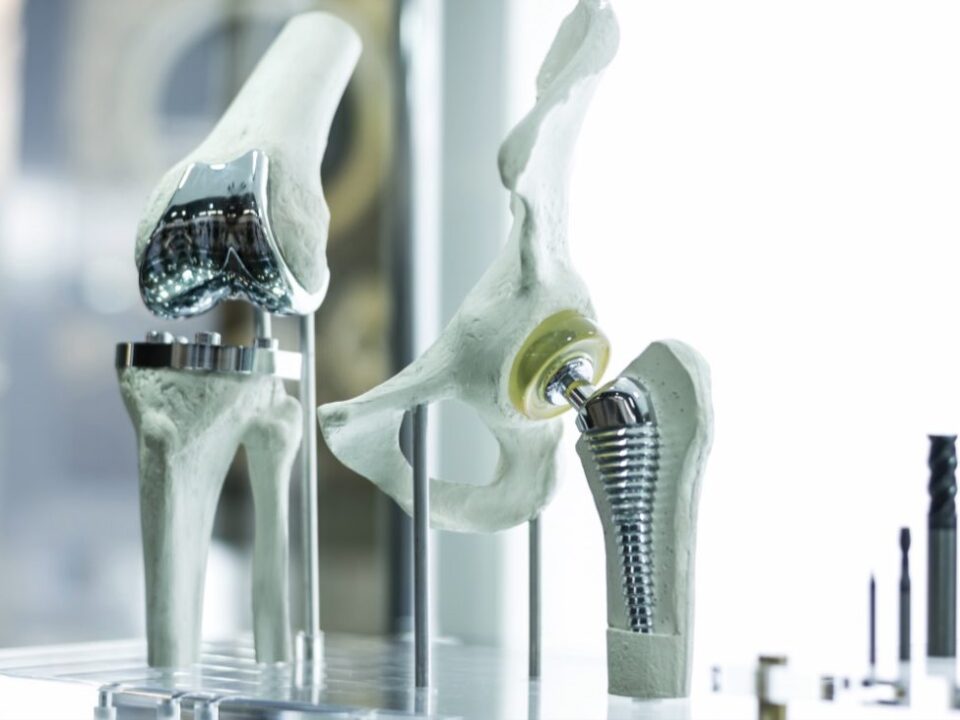
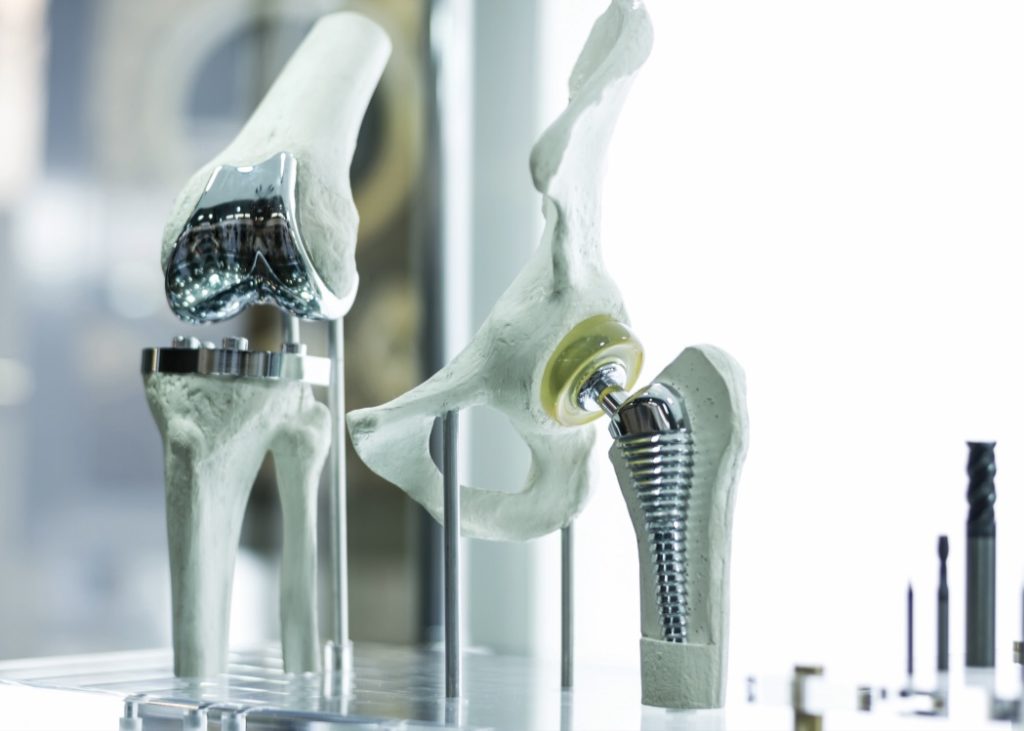
- Implant design and positioning. High-flexion implants exist and are designed for exactly this. I will be straight with you: the published evidence that they deliver meaningfully more bend in real patients is mixed rather than conclusive. They are worth discussing, not worth paying any price for.
What about kneeling?
Kneeling is a separate question and it is mostly about sensation rather than movement. The skin over the front of the knee is numb after surgery because small nerves are divided — that numbness is permanent in most people. The knee is usually strong enough to kneel on. It simply feels strange, and many patients avoid it for that reason rather than because it hurts.
If kneeling matters for your prayer or your work, practise it deliberately on a cushion from about three months. Most people who persist get used to it.
The hip is more forgiving — but the first three months are not
After hip replacement surgery in Faridabad, the range of movement is usually better than after a knee replacement, and a higher proportion of patients return to sitting cross-legged.
The risk is different. It is not stiffness. It is dislocation — the new ball coming out of the new socket. The soft tissues that hold the hip in place need around three months to heal and tighten, and in that window certain positions can push the joint out.
The position that causes dislocations
It is rarely one movement. It is a combination: deep bending of the hip, plus turning the thigh inwards, plus bringing the leg across the midline. Sitting cross-legged on the floor and then twisting to stand up is almost a textbook description of it.
This is why the first six to twelve weeks come with precautions. After that, as the tissues heal, the risk falls substantially — and many patients do return to floor-sitting.
What changes your odds
- Surgical approach. Different approaches put different structures at risk. The approach affects which movements are safest for you, and I choose it partly on what you have told me you need to do.
- Head size. A larger femoral head has to travel further before it can dislocate. For a patient whose life requires deep hip flexion, that is a real consideration.
- Dual-mobility implants. These have an additional bearing surface and a substantially wider safe range. Worth discussing if floor-sitting is non-negotiable for you.
- Your own flexibility and muscle strength. Strong gluteal muscles stabilise the hip. Rehabilitation is not optional here either.
Indian toilets — the question people are too embarrassed to ask
Ask it. It is a practical daily problem and it deserves a practical answer.
A squat toilet requires deep knee and hip flexion, and it requires you to get back up from that position. In the first three months after either operation, use a Western-style toilet. If your home does not have one, a raised commode frame over the squat pan works well and costs very little — arrange it before your surgery, not afterwards.
After three months, some patients return to using a squat toilet, more commonly after a hip replacement than a knee replacement. Many choose to keep the commode permanently because it is simply easier. Neither choice is wrong.
What to do before your operation
If floor-sitting matters to you, this conversation belongs in the consultation, not in the recovery ward.
- Say it explicitly. “I need to sit cross-legged for prayer.” “We eat on the floor.” “There is only a squat toilet at home.” These sentences change my surgical plan.
- Ask what range of movement is realistic for your knee specifically, given how far it bends now.
- Ask which implant and approach are being used, and why.
- Prepare the house. A raised commode, a firm chair with arms, and a clear path to the bathroom matter more in week one than anything else.
- Do prehabilitation. Four to six weeks of quadriceps and gluteal strengthening before surgery measurably improves what you get back afterwards.
If you have already had the surgery
If you are past three months and still cannot get the bend you want, it is worth being reviewed rather than accepting it. Stiffness that is caught early can sometimes be improved; stiffness left for a year usually cannot.
One more honest point
If you are relatively young and your main reason for considering surgery is pain rather than disability, it is worth asking whether you need a full replacement at all. A partial knee replacement in Faridabad preserves both cruciate ligaments and generally gives better bend than a total replacement. It suits roughly one in four patients coming for knee replacement.
That conversation is part of what a knee specialist in Faridabad or hip specialist in Faridabad should be having with you before anything is scheduled.
Plan Your Joint Replacement Around the Life You Actually Live
If sitting on the floor, kneeling for prayer or using a squat toilet matters to you, say so before surgery — it changes the plan. To discuss what is realistic for your knee or hip, consult Dr. Sunil Choudhary, a UK-trained best orthopedic doctor in Faridabad, at the Bone & Joints Clinic, Sector 42 (evening OPD, Monday to Saturday) or at the Asian Institute of Medical Sciences, Sector 21A (daytime OPD). Call +91 97177 67209 or +91 99717 09209. Video consultation is available for second opinions and follow-up.
Author & Medical Review
Medically reviewed by Dr. Sunil Choudhary, MBBS, MS (Orthopaedics), DNB, MRCS, FRCS (Trauma & Orthopaedics) — Royal College of Surgeons of England. Seven years of specialist training in the UK NHS; Senior Consultant and Unit Head, Orthopaedics, Asian Institute of Medical Sciences, Faridabad.
FAQs
Q. How long before I can try sitting cross-legged?
A. Not before three months for either joint, and only once your surgeon has reviewed you and cleared it. Attempting it early after a hip replacement is one of the commoner causes of dislocation.
Q. Will a high-flexion knee implant let me squat?
A. It may help, but it is not a guarantee, and the evidence is weaker than the marketing suggests. Your pre-operative range of movement predicts your result more reliably than the implant does.
Q. Can I sit cross-legged after a partial knee replacement?
A. More often than after a total replacement, yes — because less bone is removed and both cruciate ligaments are kept. It still depends on how well the knee bent beforehand.
Q. Is it dangerous to sit cross-legged long-term after a hip replacement?
A. After the tissues have healed, the risk is much lower. The implant wears slightly faster at extremes of movement, so sit cross-legged when you need to, but do not make it your default position for hours at a time.
Q. My surgeon said never to sit on the floor again. Is that right?
A. It is cautious advice, and it is not wrong — it simply reduces one risk to near zero by removing something that matters to you. It is reasonable to ask what the actual risk is in your case, with your implant, after healing is complete.