Hip Pain in Your 30s and 40s: The Diagnosis That Gets Missed

Frozen Shoulder and Diabetes: Why Yours Is Taking Longer
October 4, 2026
Returning to Cricket After ACL Reconstruction
October 18, 2026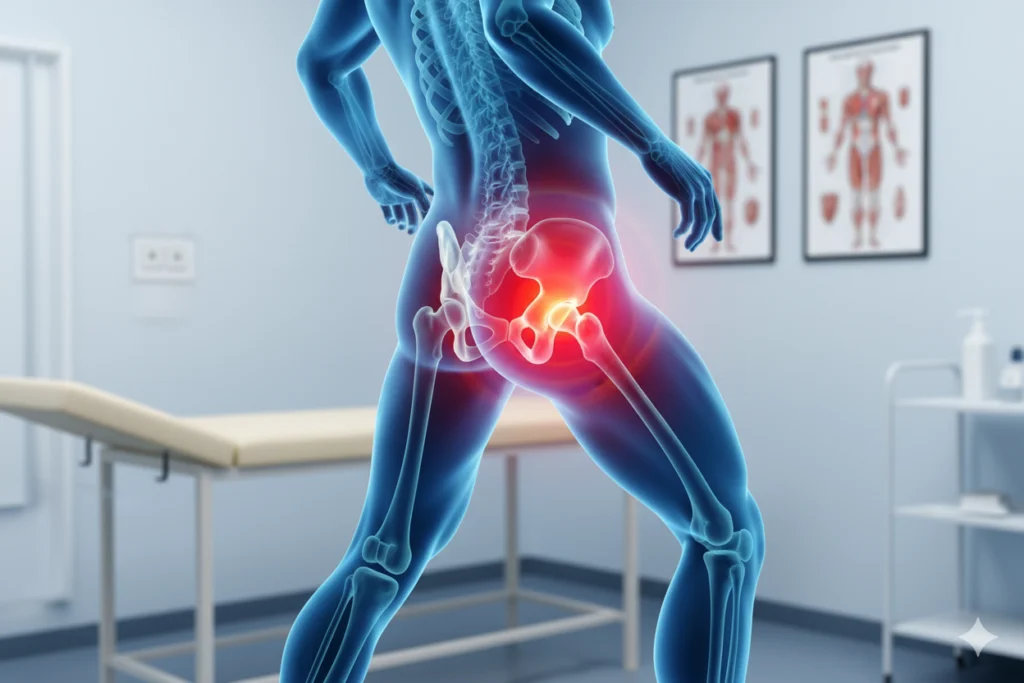
A 36-year-old comes to the clinic with groin pain that has been there for eight months. He has seen two doctors. He has had an X-ray, which was reported as normal. He has been treated for a muscle strain, then for a back problem. He has done physiotherapy. The pain is worse.
This is such a common sequence that I can often predict the diagnosis before the scan. It is avascular necrosis — AVN — and it is the condition where being missed costs the most, because what can be done about it depends almost entirely on how early it is found.
What avascular necrosis actually is
The ball at the top of the thigh bone — the femoral head — has a fragile blood supply. A small number of vessels keep it alive, and they have very few alternative routes.
If that blood supply is interrupted, a section of bone inside the femoral head dies. For a while nothing changes on the outside; the ball keeps its shape and the joint keeps working. Then the dead bone weakens, and at some point it can no longer carry your body weight. The surface collapses — and once the ball is no longer round, it destroys the cartilage of the socket it runs against, and arthritis follows quickly.
Everything about treating AVN comes down to one question: has collapse happened yet?
Why the X-ray is normal — and why that is dangerous
In the earliest stage of AVN, the bone has died but has not yet changed shape or density enough to appear abnormal on a plain X-ray. The X-ray is genuinely, truthfully normal.
So the patient is reassured. The diagnosis moves on to muscle strain, or to the back. Months pass — and those are precisely the months in which the hip could still have been saved.
Early AVN requires an MRI. An MRI shows the dead segment long before anything appears on an X-ray. If you are under 50, your groin pain has lasted more than six weeks, your X-ray is normal, and you have any risk factor below, ask for one.
Who is at risk
- Corticosteroid treatment — the commonest identifiable cause. Oral steroids given in high dose or over weeks carry the most risk, but shorter high-dose courses have been implicated too
- Significant alcohol intake, sustained over years
- Sickle cell disease and some other blood disorders
- Previous hip injury — a fracture of the femoral neck or a hip dislocation can tear the blood supply directly
- Autoimmune conditions such as lupus, partly through the disease and partly through the steroids used to treat it
- Chemotherapy and radiotherapy
- Deep sea diving — decompression-related
- No identifiable cause at all in a meaningful proportion of patients
The COVID steroid question
This deserves its own section because of how many people it affects here.
During the COVID-19 pandemic, corticosteroids were used widely and appropriately — they saved lives in patients with significant respiratory illness. In the period that followed, orthopaedic units across India reported a marked rise in referrals for avascular necrosis, typically in younger adults, often affecting both hips, and often appearing some months after the steroid course had finished.
If you were treated with steroids during a COVID admission, and you have since developed groin pain or a limp, that connection is worth raising specifically with whoever assesses you. It is the single most useful piece of history you can offer, and it is the one most often not asked about.
What AVN feels like
- Pain in the groin, sometimes radiating to the front of the thigh and occasionally as far as the knee. Groin pain is the signature — pain over the outer hip is usually something else
- Worse on weight-bearing, on stairs, on getting out of a car
- Progressive over weeks to months rather than sudden
- Night pain and rest pain as it advances
- Stiffness, particularly turning the leg inwards — often noticed first as difficulty putting on socks
- A limp that persists even on better days
One point that matters: AVN affects both hips in a large proportion of patients, and the second hip is often silent in the early stages. If one hip is diagnosed, the other should be scanned, not just examined.
Why it gets mistaken for a back problem
The hip and the lower spine share nerve supply and refer pain into overlapping areas. Hip pathology can produce buttock and thigh pain that reads as sciatica, and spinal pathology can produce groin and thigh pain that reads as a hip problem.
The practical rule: groin pain is the hip until proven otherwise. Buttock pain running below the knee with pins and needles is more likely the spine. If you have been treated for a back problem for months without improvement, ask for your hips to be examined and for a standing pelvis X-ray.
Treatment — and why timing decides everything
Before collapse
While the femoral head is still round, the goal is to save your own hip. Core decompression — drilling a channel into the dead segment to relieve pressure and encourage new blood vessels to grow in — is the mainstay, sometimes combined with bone grafting. It is a far smaller operation than a replacement, and in appropriately selected patients it can halt progression for years.
It only works before collapse. That is the whole point of finding it early.
After collapse
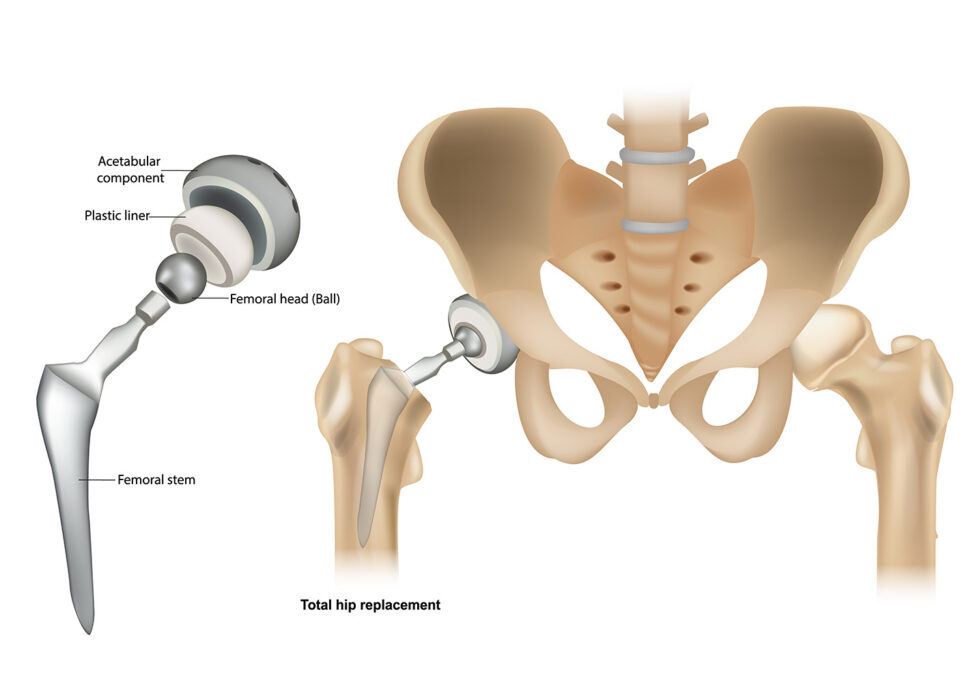
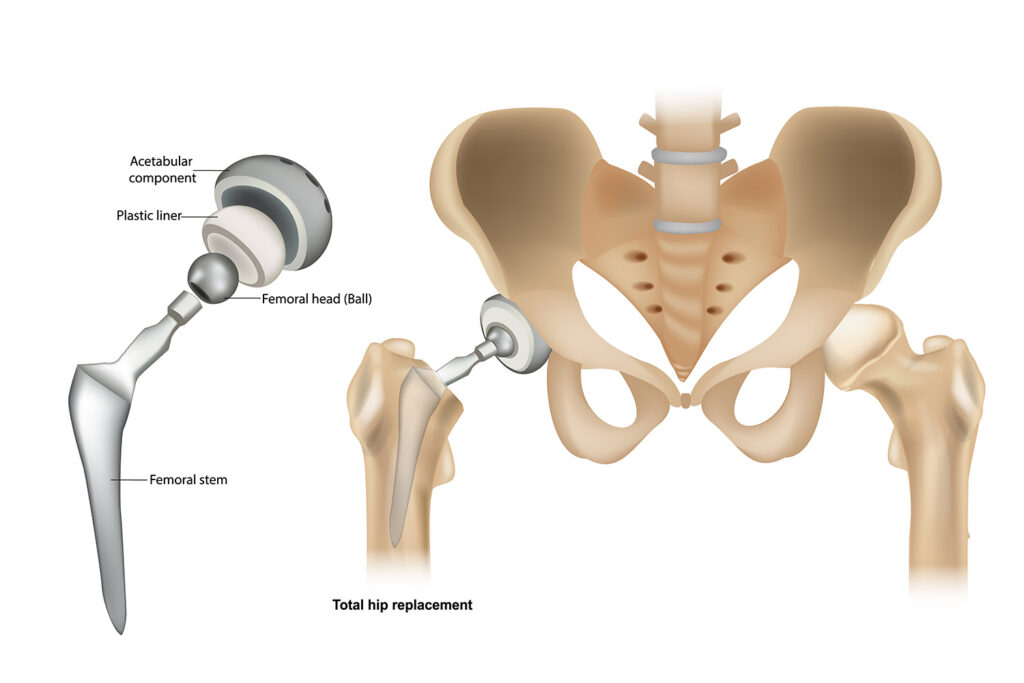
Once the surface has collapsed and the ball is no longer round, decompression will not restore it. Hip replacement surgery in Faridabad becomes the reliable option, and in a patient in their thirties or forties it should be planned with that age firmly in mind — particularly the bearing surface, because a replacement at 38 will have to last a very long time.
Modern hip replacement works extremely well in this group. But a hip you keep is still better than a hip you replace, which is why the eight months in that opening paragraph matter so much.
What to do if this sounds like you
- Write down when the pain started and where exactly it sits — groin, buttock or outer hip
- List any steroid treatment you have had, including during a COVID admission, with rough dates and duration
- Bring your previous X-rays, including the films, not just the reports
- Ask specifically about an MRI if your X-ray was normal and the pain has not settled
- Ask for both hips to be assessed
A proper assessment with a hip specialist in Faridabad takes one appointment. The difference between finding this before and after collapse is the difference between keeping your hip and replacing it.
Get Your Hip Scanned Before It Collapses
If you are under 50 with groin pain, a normal X-ray and any steroid history, do not wait it out. For an MRI-based assessment of both hips and an honest answer on whether the joint can still be saved, consult Dr. Sunil Choudhary — a UK-trained hip surgeon and a trusted best orthopedic doctor in Faridabad — at the Bone & Joints Clinic, Sector 42 or the Asian Institute of Medical Sciences, Sector 21A. Call +91 97177 67209 or +91 99717 09209.
Author & Medical Review
Medically reviewed by Dr. Sunil Choudhary, MBBS, MS (Orthopaedics), DNB, MRCS, FRCS (Trauma & Orthopaedics) — Royal College of Surgeons of England. Trained in hip and lower-limb reconstruction at North Tees University Hospital and the Royal Victoria Infirmary / Freeman Hospital, Newcastle, UK.
FAQs
I took steroids years ago. Am I still at risk?
AVN usually appears within the first couple of years after the exposure, but later presentation happens. If you have no symptoms, there is no need for screening. If you have groin pain, mention the steroid history.
Can avascular necrosis heal on its own?
Very small lesions in favourable positions occasionally stabilise. Most progress if left, and progression is one-directional. This is not a condition to watch and wait on without a plan.
Is AVN the same as arthritis?
No, though it ends in arthritis if untreated. Arthritis is wearing of the cartilage surface over time. AVN is death of bone underneath that surface, which then collapses and ruins the cartilage secondarily.
I am 35. Am I too young for a hip replacement?
You are young for one, which is exactly why the pre-collapse options should be explored first and why a second opinion is worth getting before agreeing to a replacement. If the head has already collapsed, a replacement is usually the right answer — planned appropriately for your age.
Does stopping alcohol or steroids reverse it?
It removes the ongoing insult, which is worthwhile and may slow progression. It does not revive bone that has already died.