Best Knee Replacement Surgeon in Faridabad: What You Need to Know Before Deciding on Surgery

Why Faridabad Residents Trust Dr. Sunil Choudhary as Their Orthopedic Doctor
November 2, 2026
Robotic Knee Replacement Surgery in Faridabad: How Technology Is Transforming Joint Care
November 7, 2026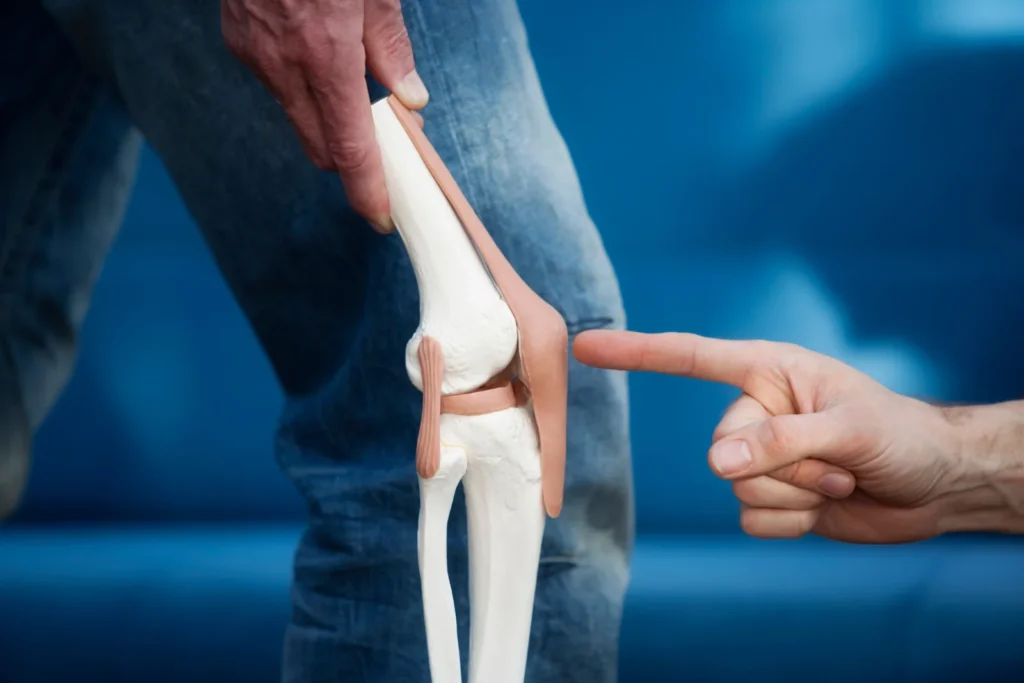
Choosing the best knee replacement surgeon in Faridabad is one of the most consequential medical decisions you’ll make. A well-performed knee replacement restores mobility, eliminates pain, and allows patients to return to an active life for 20+ years. A poorly performed one — with malaligned implants, inadequate soft tissue balancing, or the wrong surgical choice — can leave you worse off than before.
This guide covers everything a Faridabad patient needs to understand about knee replacement: when it’s indicated, which type is right for which patient, what surgery and recovery actually involve, and what separates an average result from an excellent one.
When Is Knee Replacement Surgery in Faridabad Actually Necessary?
The right time for knee replacement surgery in Faridabad is when:
- Knee pain is constant — present at rest, through the night, limiting sleep
- Walking distance is significantly restricted — unable to manage 15–20 minutes without severe pain
- Daily activities are impossible — unable to climb stairs, get up from a chair, or dress independently without pain
- Non-surgical options are exhausted — physiotherapy, weight loss, injections, and anti-inflammatory medications have been appropriately tried
- X-ray confirms end-stage arthritis — typically Kellgren-Lawrence grade 3 or 4
Types of Knee Replacement Available in Faridabad
Total Knee Replacement (TKR)
The most commonly performed knee replacement procedure — damaged surfaces of the femur, tibia, and patella are resurfaced with metal and plastic components. Modern TKR at Dr. Sunil Choudhary’s practice uses cemented or cementless fixation, cruciate-retaining or posterior-stabilised design, and high-flex implants (>130° flexion) important for Indian patients who need to sit cross-legged. Total knee replacement with modern implants has 15-year survival rates above 95%.
Partial (Unicondylar) Knee Replacement
When arthritis is confined to only one compartment, a partial knee replacement replaces only the damaged area while preserving all healthy bone, cartilage, and ligaments. Advantages: smaller incision, shorter hospital stay (1–2 days vs 3–4 days), faster rehabilitation, more natural feel as cruciate ligaments are preserved. Ideal candidate: medial compartment arthritis only, intact ACL and PCL, body weight under 90 kg, age over 55.
Revision Knee Replacement
When a previous total knee replacement fails — from loosening, infection, instability, component fracture, or persistent pain — revision total knee replacement is significantly more complex than primary replacement. It requires specialised implant systems and experience with the pathological changes unique to a failed replacement.
Robotic-Assisted Knee Replacement: Why Technology Changes Outcomes
The single biggest surgical factor in long-term knee replacement success is implant alignment. Studies show implants placed outside a 3° deviation from the correct mechanical axis have a 24× higher failure rate at 10 years. Computer-assisted robotic joint replacement surgery at Dr. Sunil Choudhary’s practice uses a pre-operative CT-based 3D plan and intra-operative robotic arm that constrains the saw to cut within a 1 mm and 1° boundary of the plan.
The Knee Replacement Surgery Process: Step by Step
- Pre-operative assessment (2–4 weeks before): blood tests, ECG, anaesthetic assessment, optimisation of medical conditions. Physiotherapy exercises to build quadriceps strength before surgery.
- Surgery (60–90 minutes under spinal anaesthesia): tourniquet, anterior midline incision, joint exposed, arthritic bone surfaces cut, components cemented or press-fitted, wound closed.
- Day 0–1: Standing with physio on the day of or day after surgery — early mobilisation reduces clot risk.
- Days 2–4: Walking with frame or crutches, climbing stairs with supervision, discharge planning.
- Weeks 2–6: Graduated physiotherapy at home or outpatient.
- 3 months: Most patients walking without aids, managing stairs, driving.
- 6–12 months: Full recovery.
Book Your Knee Replacement Assessment in Faridabad
Dr. Sunil Choudhary | MS (Orthopaedics) | Best Knee Replacement Surgeon in Faridabad | Bring your existing X-rays and scans. Same-week appointments available. Visit drsunilchoudhary.in to book.
FAQs for knee replacement surgery in Faridabad
1. What is the best age for knee replacement surgery in Faridabad?
There is no “best age” — the right time for surgery is when severe arthritis is significantly limiting your quality of life and non-surgical options have been appropriately exhausted. Modern implants are designed to last 20+ years, making surgery appropriate even for patients in their 50s with end-stage arthritis.
2. How long is the hospital stay for knee replacement in Faridabad?
Total knee replacement typically requires 3–4 days. Partial knee replacement 1–2 days. Enhanced recovery programmes at Dr. Sunil Choudhary’s practice prioritise early mobilisation and discharge.
3. Can both knees be replaced at the same time?
Bilateral simultaneous knee replacement is technically possible and reduces total recovery time. However, it carries higher physiological stress — it is typically offered to fit, younger patients without significant cardiac or pulmonary disease, after careful anaesthetic assessment.
4. Is partial knee replacement better than total knee replacement?
When the anatomy is right (single compartment disease, intact ligaments, appropriate body weight), partial knee replacement offers a faster recovery and more natural feel. When all three compartments are arthritic or ligaments are compromised, total knee replacement is the more reliable option.
5. What are the signs that a knee replacement has failed?
Increasing pain after an initial pain-free period, joint warmth and swelling (possible infection), instability (the knee giving way), or a grinding/clunking sensation not present immediately after surgery. All of these warrant prompt evaluation for revision knee replacement.